
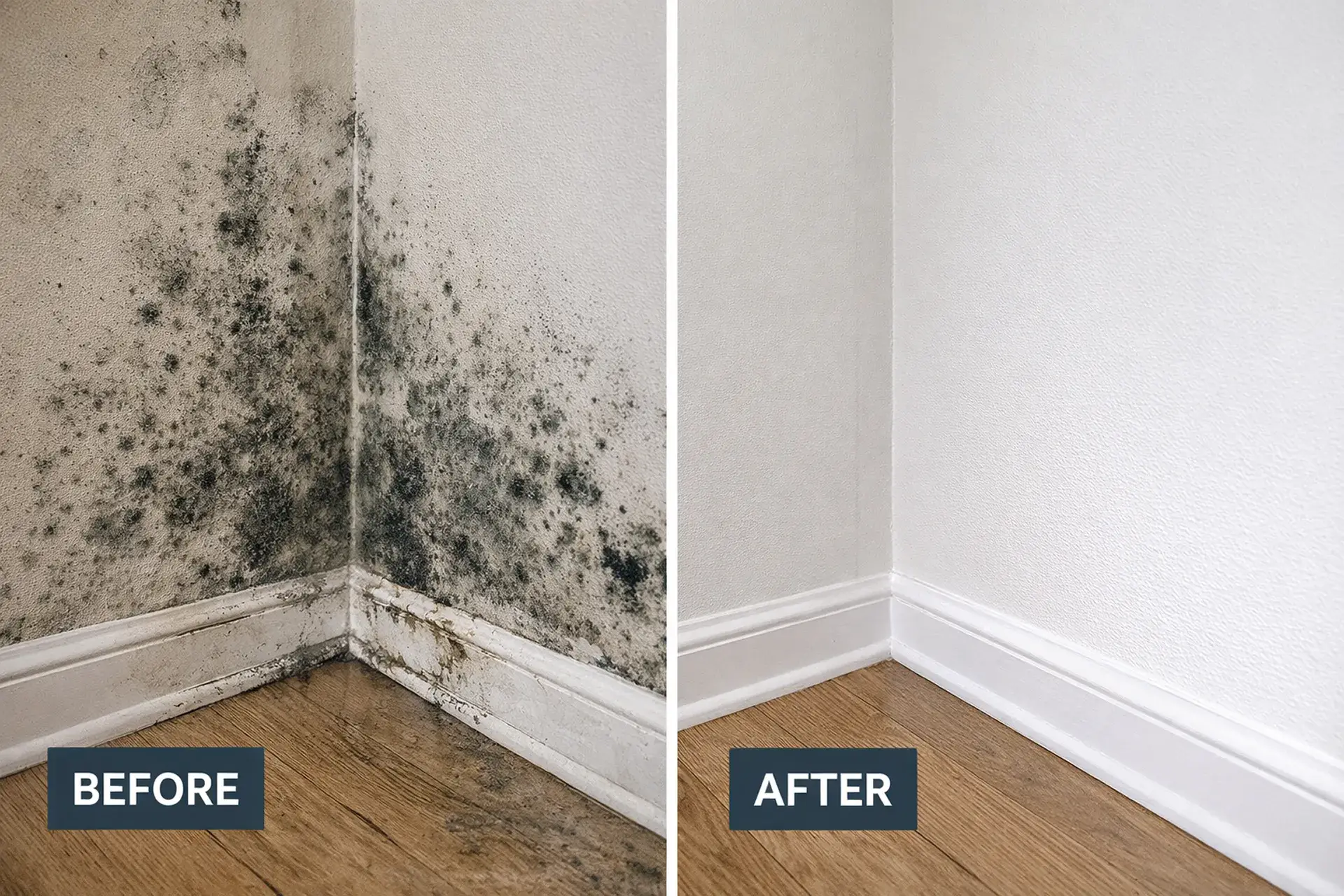
Understanding How Mold Develops Inside Walls
Mold growth inside walls is rarely the result of a single event. It typically begins when moisture becomes trapped in enclosed spaces where airflow is limited and organic materials are present. Drywall paper, wood studs, insulation, and dust all provide a food source for mold spores, which are naturally present in indoor and outdoor air. When moisture from leaks, condensation, flooding, or humidity persists long enough, spores settle and begin to colonize surfaces hidden from view.
Water intrusion is the most common trigger. Plumbing leaks inside walls, slow roof leaks that migrate downward, poorly sealed windows, and foundation seepage can all introduce moisture without obvious surface signs. In some cases, high indoor humidity combined with cold exterior walls causes condensation to form behind drywall, especially in bathrooms, kitchens, basements, and exterior-facing rooms. Over time, repeated wetting prevents materials from drying fully and creates ideal conditions for mold growth.
Because wall cavities are concealed, mold can grow extensively before occupants realize there is a problem. Odors often appear first, described as musty or earthy. Discoloration on walls, peeling paint, bubbling drywall, or warped baseboards may follow. In more advanced cases, occupants may experience allergy-like symptoms that worsen when spending time indoors. Understanding how mold establishes itself inside walls is essential, because successful remediation depends on addressing both the mold and the moisture that allowed it to thrive.
Identifying Mold Hidden Behind Wall Surfaces
Identifying mold inside walls requires observation, investigation, and sometimes invasive inspection. Visual signs on wall surfaces may include staining, dark patches, or irregular spotting, though mold is not always visible. Paint and wallpaper can conceal underlying growth, making surface appearance misleading. A persistent musty smell localized to a specific room or wall section is often a strong indicator of hidden mold activity.
Moisture detection tools play a critical role in confirming suspicions. Moisture meters can detect elevated moisture levels in drywall or wood without opening the wall. Infrared thermal imaging can reveal temperature anomalies caused by damp materials, helping pinpoint affected areas. These tools allow for targeted inspection rather than unnecessary demolition.
When indicators suggest mold inside a wall, a small inspection opening is often required. Cutting a limited access hole allows direct examination of drywall backing, insulation, and framing. This step confirms the presence of mold and reveals how widespread the contamination is. The extent of growth determines whether remediation can be handled on a small scale or requires professional containment measures.
It is important to recognize that mold color alone does not indicate toxicity or severity. Black, green, white, and gray molds can all grow inside walls, and visual appearance cannot determine health risk. The focus should remain on the presence of active growth and moisture damage rather than identifying specific species. Proper identification of affected areas ensures that remediation efforts are thorough and effective.
Safely Removing Mold and Damaged Wall Materials
Remediating mold inside walls begins with controlling exposure and preventing spread. The affected area should be isolated from the rest of the building to reduce airborne spores traveling during removal. Ventilation to the outdoors and careful handling of materials are essential to keep contamination contained.
Damaged drywall is typically removed to expose the wall cavity. Drywall that shows mold growth or has absorbed moisture beyond drying capacity must be cut out and discarded. Removal should extend beyond visibly affected sections to include surrounding material that may harbor unseen growth. Insulation within the cavity is often compromised and usually requires replacement, especially if it is fiberglass or cellulose that has become damp.
Once the cavity is open, mold on wood framing and sheathing must be addressed. Loose mold growth is removed using appropriate cleaning methods that physically eliminate spores rather than simply killing them in place. Surfaces are cleaned until no visible residue remains, and debris is carefully collected and disposed of to prevent recontamination.
Drying is a critical phase of mold remediation. All exposed materials must be thoroughly dried before repairs begin. Dehumidifiers and air movers are used to reduce moisture content to normal levels. Skipping or rushing this step increases the likelihood of mold returning, even after thorough cleaning.
Protective measures during removal are essential for safety. Disturbing mold releases spores into the air, which can be inhaled or settle elsewhere in the building. Proper precautions reduce health risks and ensure that the remediation process improves indoor conditions rather than worsening them.
Repairing Walls and Preventing Future Mold Growth
After mold removal and drying are complete, wall reconstruction can begin. New insulation is installed once moisture levels are confirmed to be within acceptable limits. Drywall is replaced, seams are sealed, and surfaces are finished to restore the wall’s appearance. Repairs should not proceed until the underlying cause of moisture has been fully resolved.
Preventing future mold growth depends on correcting the conditions that allowed it to develop. Plumbing leaks must be repaired, roof and window penetrations sealed, and drainage issues addressed. In areas prone to humidity, improving ventilation and controlling indoor moisture levels are essential. Bathrooms, laundry rooms, and kitchens benefit from effective exhaust systems that remove moisture before it can accumulate.
Building materials and finishes also play a role in long-term prevention. Moisture-resistant drywall, proper vapor barriers, and high-quality paint coatings can help limit moisture absorption in vulnerable areas. While these measures do not make walls immune to mold, they reduce risk when combined with good moisture management.
Ongoing monitoring helps ensure that remediation efforts remain successful. Periodic checks for moisture, odors, or surface changes allow early detection of problems before mold becomes established again. Maintaining consistent indoor humidity and responding quickly to water incidents are among the most effective ways to keep mold from returning inside walls.
Addressing mold in walls is a process that extends beyond removal alone. By understanding how mold forms, identifying hidden growth, removing contaminated materials properly, and preventing moisture intrusion, it is possible to restore wall systems and maintain a healthier indoor environment over the long term.