
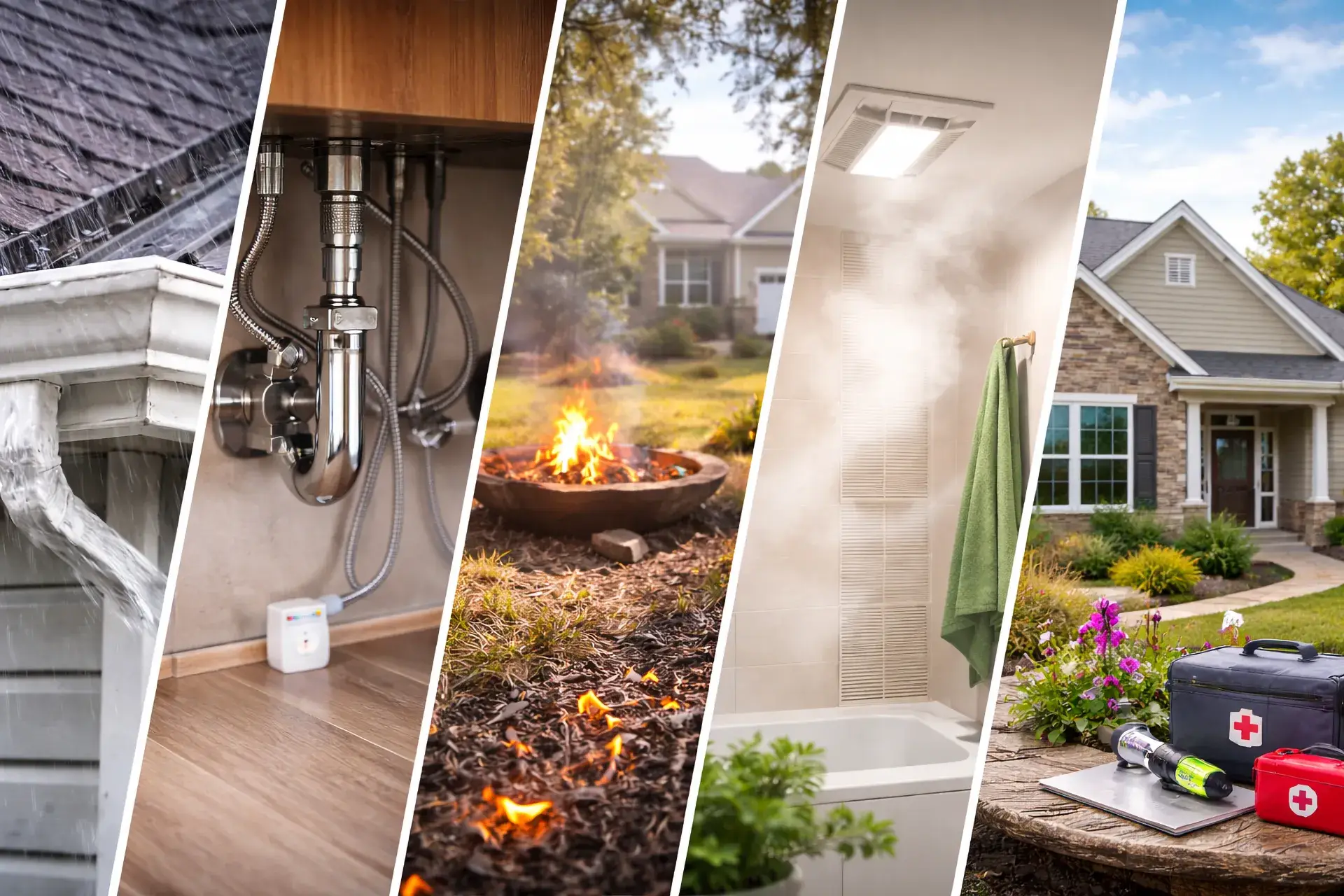
San Diego’s weather feels mild most of the year, but local homeowners know how quickly things can change. A heavy winter storm exposes every weak spot in a roof. A burst supply line can flood a hallway in minutes. A small kitchen fire fills an entire home with smoke and soot. When that happens, people rush to search for disaster restoration San Diego services and hope they can salvage their home as quickly as possible.
Real resilience starts long before you ever call a contractor. It comes from understanding how water, fire, and mold actually affect San Diego homes, and then making a few smart upgrades and habit changes that dramatically reduce your risk. The goal of this article is to walk through five practical ideas that tie together water damage prevention, fire safety tips home, and mold prevention tips so your home is safer, healthier, and easier to restore if something ever goes wrong.
Understanding Disaster Risks in San Diego
Before you can prevent damage, it helps to understand the unique mix of risks that come with living in San Diego. Unlike regions that face intense hurricanes or deep freezes, San Diego’s biggest residential threats tend to come from intense but occasional rains, aging plumbing systems, and the ever-present possibility of wildfire and smoke damage drifting into urban neighborhoods. Many homes here are built on slabs or have older stucco exteriors, which can hide slow leaks for a long time before they become obvious.
Storms are a good example. A typical light rain might not reveal any problems, but when a strong system parks over the county, water can overwhelm clogged gutters, poorly designed drainage, and minor roof defects that have been ignored for years. Instead of running safely away from the house, water sits against the foundation or sneaks behind stucco and flashing. That trapped moisture is the starting point for many future calls to a disaster restoration San Diego specialist. The same concept applies inside the home. Corroded supply lines, loose connections, and neglected water heaters can eventually fail with enough pressure and time, and because much of the plumbing is hidden in walls and beneath floors, homeowners often discover problems only after they see stains, hear dripping, or smell something musty.
Wildfires and heat waves create a different set of hazards. Even if flames never come close to your street, blowing embers, ash, and smoke can affect roofs, attic vents, outdoor furniture, and indoor air quality. Smoking materials, candles, and overloaded electrical circuits add more risk from the inside. Whenever one of these threats turns into a real emergency, the event often causes more damage than it should have, simply because there was no plan in place or the home was not prepared. By understanding that water, fire, and mold are all linked through moisture, heat, and time, you can start to shape a strategy that addresses all three together instead of treating them as separate problems.
Preventing Water Damage in Your Home
Water damage prevention is one of the most impactful things you can focus on as a homeowner, because it directly reduces your chances of both structural damage and mold issues. Think of your home in two zones: outside and inside. Outside, your main job is to control how rainwater moves around your property. Inside, your job is to control how plumbing and appliances behave and to respond quickly when something looks or feels off.
On the exterior, pay attention to the way water behaves during the next rain. If you see water spilling over the edges of gutters rather than flowing down the downspouts, it is a sign that gutters are clogged or undersized. When water pours directly next to your foundation, it can seep into crawlspaces, slab edges, and wall systems, sometimes traveling far from the original entry point. Walking your property after a storm and noting where puddles form gives you a roadmap for improvements. Regrading soil, adding extensions to downspouts, or installing simple drainage channels can move water away from your home before it ever has the chance to get inside.
Inside, water damage prevention starts with awareness. Locate your main shutoff valve so you can turn off water quickly if a pipe bursts or a fixture fails. Inspect visible supply lines under sinks, behind toilets, and at the washing machine. If you see bulging hoses, corrosion, or slow drips, treat them as early warning signs rather than minor annoyances. Upgrading to braided stainless-steel supply lines and scheduling a professional plumbing inspection every so often can prevent dramatic failures. Appliances like water heaters and dishwashers should also be checked regularly for rust, mineral buildup, and leaks around connections.
Smart technology can support your efforts too. Simple leak sensors under sinks and near water heaters can alert you when moisture is detected. Some systems can even shut off the main water supply automatically when they sense a significant leak. These kinds of tools are especially helpful for second homes or for owners who travel frequently. If water does escape and you cannot fully dry the affected area within a day or so, this is when it pays to know a reliable restoration company near me. Professional teams use commercial extraction and drying equipment, as well as moisture meters and thermal imaging, to confirm that hidden spaces are dry. Taking this step may feel cautious, but it is often what prevents a small incident from turning into a larger, more expensive mold problem later.
Fire Safety and Home Hardening
Water may be the most common cause of damage, but fire is often the most feared. A single small fire can cause an enormous amount of visible and invisible damage, from charred materials to lingering smoke odor in every fabric and surface. Many of the most effective fire safety tips home are essentially habit changes and basic housekeeping, while others involve simple upgrades to your home’s structure and surroundings.
Inside the home, start by giving critical systems the attention they deserve. Smoke alarms are only useful when they are present, correctly placed, and working. Each level of the home, and every sleeping area, should have smoke detection that is tested regularly. If you cannot remember the last time you changed batteries, it is time to do it. In the kitchen, where many residential fires begin, keep combustibles like towels and packaging away from open flames and hot surfaces. Never leave active cooking unattended, especially when frying with oil. It is helpful to keep a small, multi-purpose fire extinguisher in an accessible but not cluttered spot, and to review how to use it so you do not hesitate if something happens.
Electrical safety and heat sources are another important piece of the puzzle. Avoid overloading outlets and power strips, and replace damaged cords instead of taping them. Space heaters should have adequate clearance from curtains, bedding, and furniture. Candles add ambiance, but they also add risk when left burning unattended or placed near flammable materials. Working through these ordinary habits and correcting them reduces your overall risk more than many people realize, and it costs very little to do.
Outside, home hardening focuses on how your property would behave if embers or flames approached. In San Diego, this can mean trimming branches away from roofs and chimneys, cleaning leaves and debris from gutters and roof valleys, and removing dry vegetation close to the building. It can also mean moving firewood stacks, stored lumber, and combustible items away from exterior walls. Attic and crawlspace vents deserve special attention, since embers can be blown into these openings. Installing screens with appropriately small mesh can help. Over time, when you replace roofing or siding materials, considering more fire-resistant options further increases your resilience.
Even with these precautions, fires still happen. When they do, a disaster restoration San Diego company can assist with everything from emergency board-up and structural stabilization to smoke and soot cleanup, deodorization, and reconstruction. If you have already chosen a provider in advance and stored their contact information with your important documents, you can move faster in those first stressful hours, which often speeds up both insurance claim processing and the restoration schedule.
Mold Prevention and Emergency Planning
Mold often begins as a secondary issue after water intrusion or high humidity, yet it can end up being one of the most disruptive problems for homeowners. Mold prevention tips largely revolve around a single principle: do not allow building materials to stay damp for long periods. That sounds simple, but in practice it requires paying attention to ventilation, humidity, and small maintenance issues throughout the home.
Bathrooms, kitchens, and laundry areas are the typical high-moisture zones. In bathrooms, exhaust fans should be vented outdoors and powerful enough to move air out of the room effectively. Running the fan during a shower and for a period afterward helps remove steam that would otherwise condense on walls and ceilings. In the kitchen, using a range hood while cooking, especially when boiling or simmering for long periods, helps reduce humidity. Laundry rooms benefit from properly maintained dryer vents that exhaust outside, not into attics or crawlspaces. When vents are clogged or disconnected, both moisture and lint can accumulate where they do not belong.
Whole-house strategies matter too. Many homeowners find it useful to keep a simple humidity monitor in one or two rooms. If readings consistently creep above comfortable levels, a dehumidifier can help pull moisture out of the air, particularly in basements, converted garages, or windowless spaces. Furniture pushed tight against exterior walls can sometimes trap moisture and limit air movement, so leaving a small gap can improve airflow. Whenever you see condensation on windows or walls, or notice a persistent musty odor, treat it as a signal to investigate further rather than something to ignore.
Emergency planning ties everything together. A basic plan does not have to be complicated, but it should be written down and shared with everyone in the household. Include instructions on how to shut off the main water supply in case of a significant leak, as well as where to find electrical and, if applicable, gas shut-offs. Keep the phone numbers of your insurance carrier and your preferred disaster restoration San Diego company in your phone and in a physical folder. Place that folder with other essentials such as identification, mortgage documents, and a short room-by-room inventory of your belongings.
Part of emergency planning is also knowing when a situation has moved beyond what you can safely or effectively handle on your own. If an area has been wet for longer than a day or two, if you see visible mold covering a large area, or if anyone in your home is experiencing respiratory symptoms that might be linked to indoor conditions, it is wise to contact a restoration company near me with experience in both water and mold remediation. Professionals can assess the extent of the damage, contain affected areas, remove contaminated materials safely, and dry the structure correctly so mold does not simply return later. With a thoughtful mix of prevention, smart habits, and pre-planned professional support, your home becomes much more resilient to whatever water, fire, or mold challenges might come its way.