
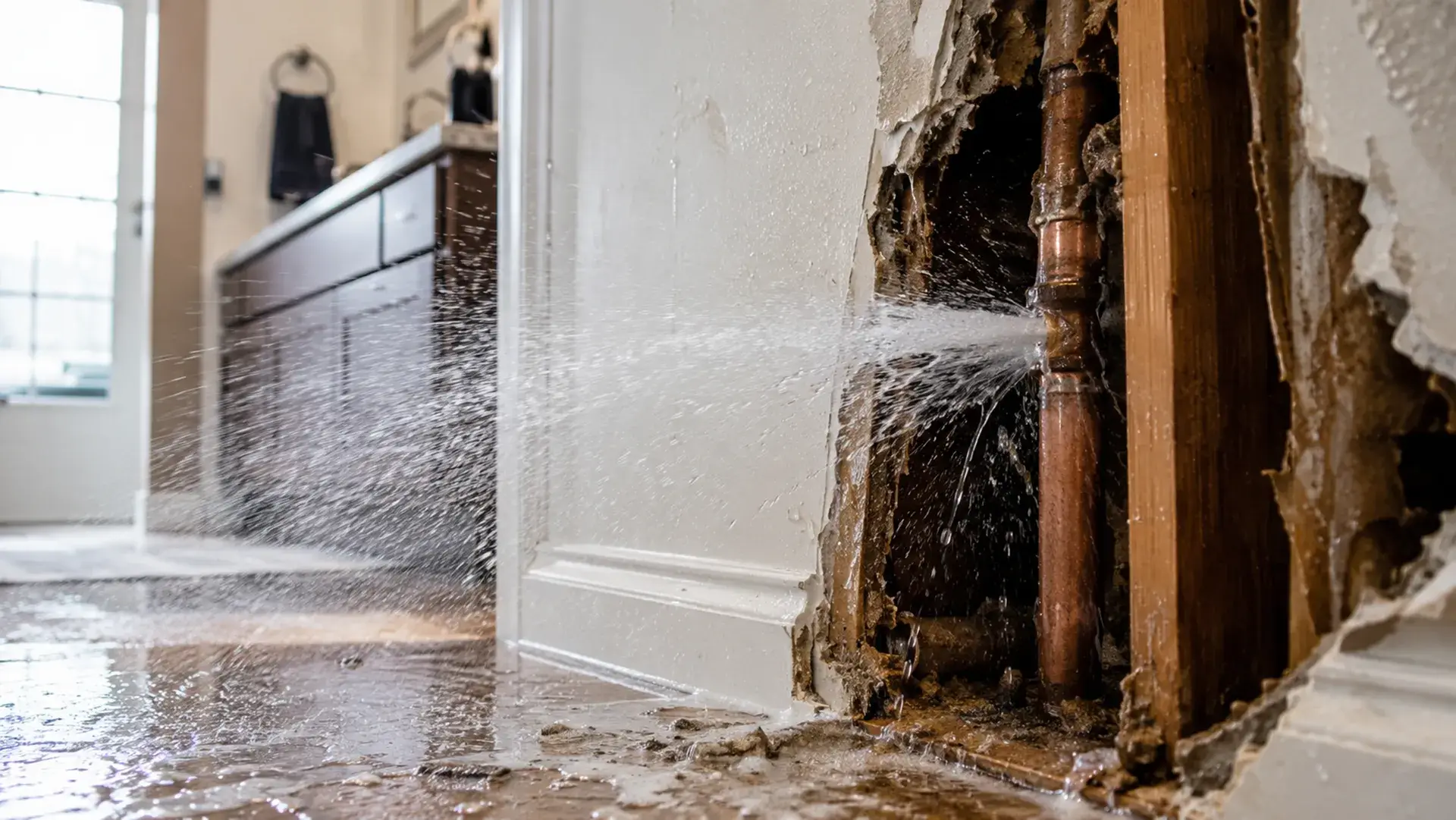
The sudden, unmistakable sound of a pipe bursting inside a wall is a moment of pure panic for any San Diego homeowner. It is an event that immediately shifts the atmosphere from calm to crisis, and the instinct to act is both natural and correct. Beyond the initial shock of gushing water and the frantic rush to find the main shutoff valve, a more insidious process begins, hidden from view. The water that disappears into your home’s structure starts a cascade of damage that unfolds in stages, beginning with immediate saturation and leading to long-term threats to your property’s health and integrity. What is visible on the surface — a wet floor, a damp wall — is only a fraction of the full picture. The real story of a burst pipe is told in the materials you cannot see: the insulation packed into wall cavities, the wooden studs that frame your rooms, the subfloor that lies beneath your feet, and the electrical wiring that runs through it all. Understanding what is happening behind your drywall is the first step in recognizing the critical need for a swift and professional response. The moments following the containment of the initial leak are not a time for relief, but rather a crucial window to prevent deeper, more complicated problems from taking root within the very framework of your home. The longer you wait, the more the damage compounds, and the more the cost of restoration grows.
The Immediate Aftermath of a Burst Pipe
Once a pipe ruptures, the damage begins instantaneously. Water, propelled by the pressure within your plumbing system, does not simply trickle; it floods the enclosed cavity of the wall with significant force. Drywall, a porous material composed of gypsum plaster pressed between sheets of paper, acts like a sponge. It immediately begins to absorb the water, and its structural integrity starts to diminish within minutes. The paper facings weaken and can separate from the gypsum core, while the core itself becomes soft and pliable, losing its ability to hold fasteners and support the weight of any fixtures attached to it. Simultaneously, the insulation within the wall cavity, whether it is fiberglass batts, cellulose, or spray foam, becomes saturated. This not only negates its thermal performance but also turns it into a heavy, sodden mass that holds moisture against other structural elements for an extended period. Water then begins its migration, pulled by gravity downwards and spreading outwards along every path of least resistance, saturating the wooden or metal studs of the wall frame, the sill plate at its base, and the subfloor below. This initial phase also introduces a significant safety risk that many homeowners overlook. Water is an excellent conductor of electricity, and as it spreads through the wall cavity, it can quickly come into contact with electrical outlets, switches, and the wiring itself. This creates a serious hazard of short circuits, tripped breakers, and potentially dangerous electrical shock, which is why cutting power to the affected area should be one of the very first actions taken after the water supply is shut off.
The Unseen Damage Developing Within Hours
In the hours following a pipe burst, the damage evolves from simple saturation to the beginning of serious material degradation. The wooden studs and subfloor that form the skeleton of your home continue to soak up the water they are in contact with, and the consequences of this absorption begin to manifest. As wood absorbs moisture, its fibers swell. This expansion can cause the wood to warp, twist, cup, and even crack, compromising its structural role. The pressure from swelling wood can push against the drywall panels it supports, causing seams to split, nail heads to pop, and the surface to bulge. Flooring materials are particularly vulnerable during this phase. Hardwood floors can begin to cup — where the edges of each plank rise higher than the center — within just a few hours of significant water exposure. Laminate flooring can swell at the seams and begin to buckle. Tile, while impervious to water itself, can be affected by the movement of the subfloor beneath it, leading to cracked grout lines and even cracked tiles. This is also the critical window when the threat of mold growth begins to emerge. Mold spores are a natural and ubiquitous part of our environment; they are present in virtually every home and in the outdoor air. They are dormant and harmless until they encounter the right conditions, and a damp wall cavity provides exactly what they need. Within just 24 to 48 hours of water exposure, these dormant spores can begin to activate and colonize, spreading a network of microscopic roots called hyphae into the damp materials around them. This growth is entirely hidden from view, a silent infestation that will continue to thrive and expand as long as moisture is present, setting the stage for a far more complex remediation challenge.
Long-Term Consequences of Untreated Wall Damage
If the moisture trapped within the walls is not professionally addressed and fully dried within a matter of days, the consequences can escalate from concerning to severe and potentially irreversible. The prolonged presence of water on wooden structural components will inevitably lead to wood rot, a process by which wood-decay fungi break down the cellulose and lignin that give wood its strength. These fungi thrive in the same moist, dark conditions that support mold growth, and they work methodically, turning strong, load-bearing framing into a soft, spongy, crumbling mass that can no longer support the loads it was designed to bear. This structural compromise can result in sagging floors, distorted and bowing walls, and a fundamentally weakened building envelope, requiring extensive and costly structural repairs that go far beyond simple drywall replacement. Meanwhile, the hidden mold colony that began forming within the first 48 hours continues to flourish and expand. As it grows, it releases millions of new reproductive spores into the air within the wall cavity and, eventually, into the living spaces of the home. This can significantly degrade indoor air quality and lead to a range of health issues for occupants, from persistent allergic reactions and respiratory irritation to more serious conditions in individuals who are particularly sensitive to mold exposure. A musty, unpleasant odor will also begin to permeate the home, emanating from the decaying materials and microbial growth within the walls. This odor is notoriously difficult to eliminate without physically removing the source materials. Furthermore, cosmetic issues will become increasingly apparent over time, including persistent paint bubbling, peeling, and dark staining that bleeds through new coats of paint, serving as a constant and frustrating reminder of the unresolved damage lurking beneath the surface.
The Professional Restoration Process for Walls
The only way to truly and completely address the complex, multi-layered damage within a wall after a pipe burst is through a professional restoration process carried out by certified technicians. The first step is a thorough and systematic assessment using specialized equipment that goes far beyond what the naked eye can detect. Moisture meters are used to measure the moisture content of drywall, wood, and other materials, providing precise data on the extent of saturation. Thermal imaging cameras detect temperature differentials caused by evaporating moisture, allowing technicians to identify wet areas hidden behind intact surfaces without the need for exploratory demolition. This technology-driven assessment allows the team to map the full extent of the water’s migration and create a targeted drying plan. Based on this assessment, the process of controlled demolition begins. Saturated drywall and insulation that cannot be effectively dried in place are carefully cut away to expose the wet structural components to the drying equipment. This step is absolutely critical for a successful outcome and is a key part of the water damage remediation services that ensure all hidden moisture is found and eliminated. With the wall cavity open and accessible, a strategic arrangement of high-volume air movers and low-grain refrigerant dehumidifiers is installed throughout the affected area. The air movers create a high-velocity airflow that accelerates the evaporation of moisture from the exposed wood framing and other materials, while the dehumidifiers capture that evaporated moisture from the air and remove it from the space. This equipment works together in a carefully calibrated system to create an optimal drying environment, and daily moisture readings are taken to monitor progress and adjust the setup as needed until all materials are returned to an acceptable, pre-damage moisture level. Once drying is complete and verified, all affected surfaces are cleaned and treated with an EPA-registered antimicrobial agent to kill any mold spores that may have begun to develop and to prevent any future growth. The final stage is the reconstruction phase, which restores the area to its original condition as part of a complete residential property damage restoration. New insulation and drywall are installed, seams are taped and finished, and the surface is textured and painted to seamlessly match the rest of the room.